What AI agents actually are (explained without the jargon)
"Agent" has been doing a lot of work in marketing copy lately, and almost none of it has been explanatory. So business owners who run genuinely complex operations — payroll, hiring, compliance, logistics — feel underqualified to evaluate a technology that is, structurally, a written document. This 8-slide breakdown takes the mystery out of it, one layer at a time.

Somebody sold you a word, not a thing
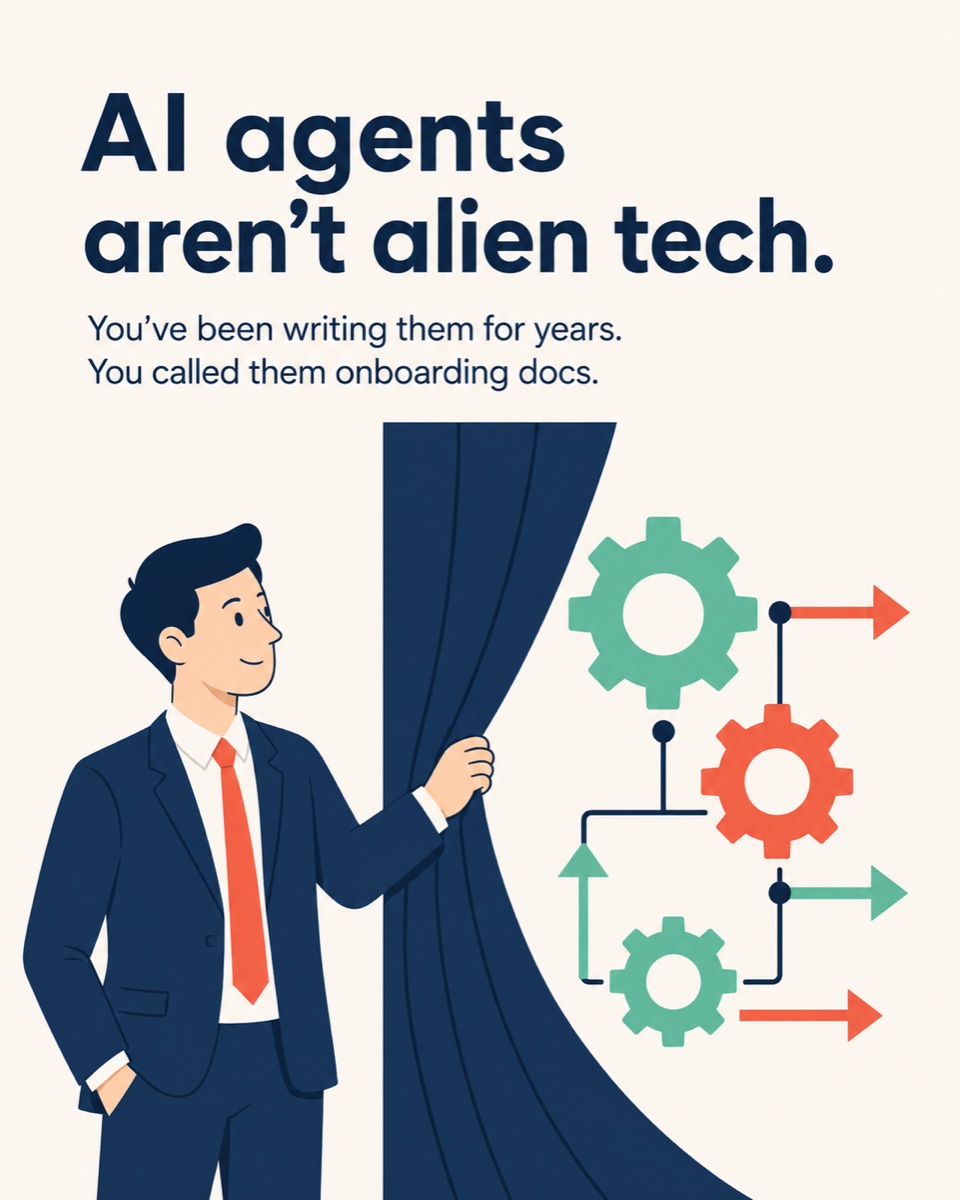
“Agent” has been doing a lot of work in marketing copy lately, and almost none of it has been explanatory. The result is a strange situation where business owners who run genuinely complex operations — payroll, hiring, compliance, logistics — feel underqualified to evaluate a technology that is, structurally, a written document.
So let’s take the mystery out of it, one layer at a time.
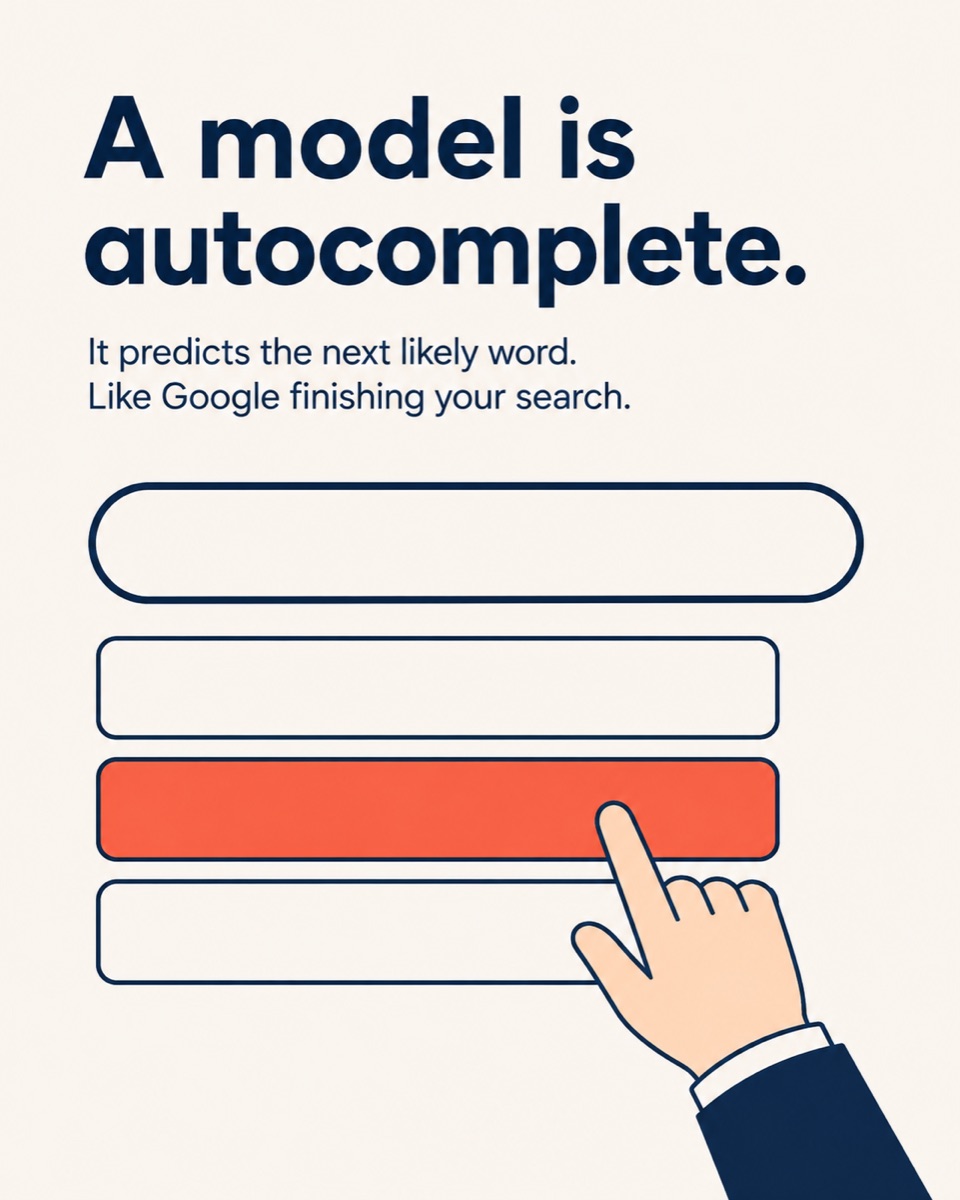
Layer one: the model is autocomplete
A large language model predicts the next likely word. That’s the mechanism. Same principle as Google finishing your search box, or your phone suggesting the end of a sentence — just trained on vastly more text and much better at holding a thread.
This matters because it reframes what you’re working with. You’re not commanding an intelligence. You’re steering a very well-read, very fast prediction engine. It has no goals of its own. Everything useful it does comes from what you put in front of it.
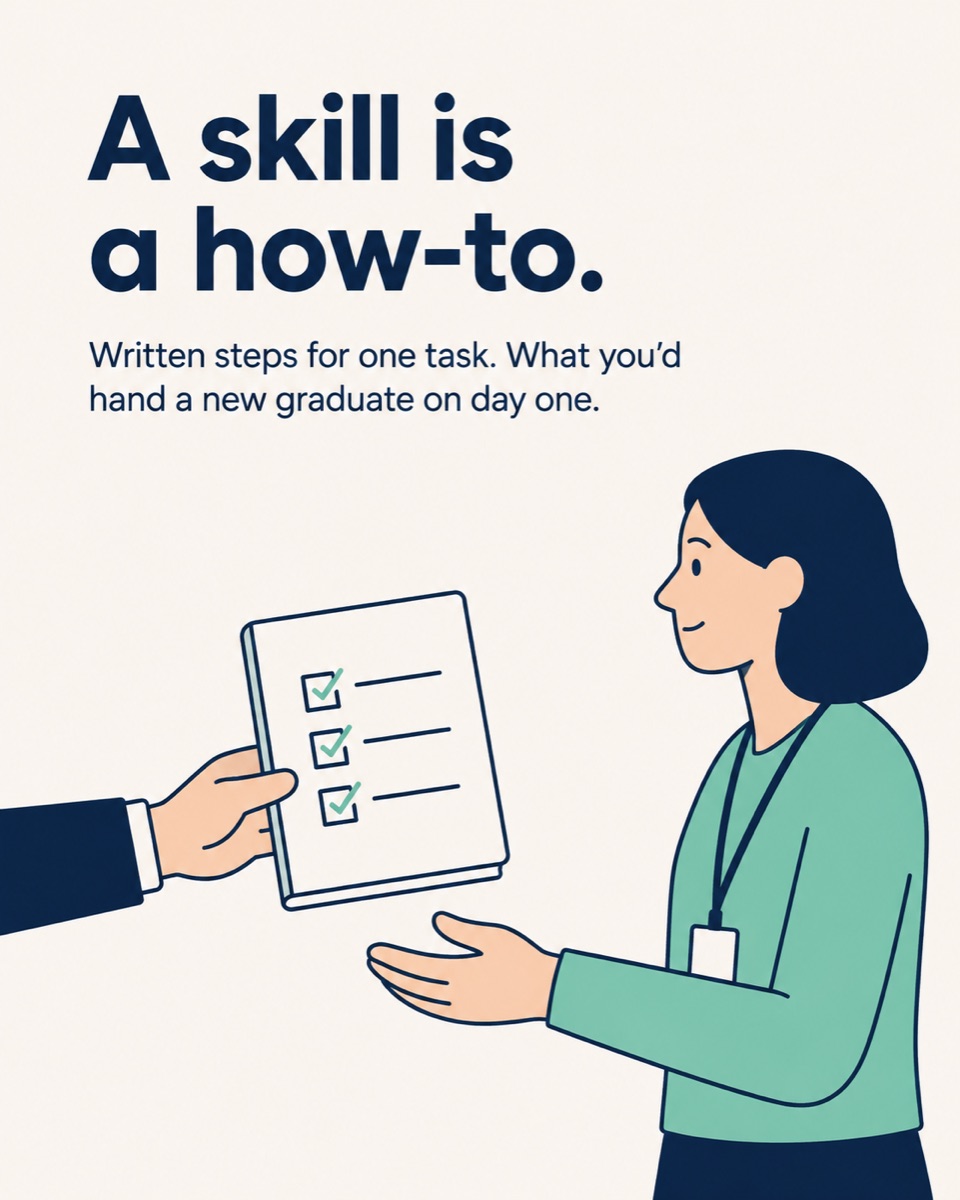
Layer two: a skill is a how-to guide
When you hire a graduate, you don’t expect them to intuit your invoicing process. You write it down: here’s the sequence, here’s the format, here’s what “done” looks like, here’s what to do when it goes sideways.
A skill is that document. Written in plain English, aimed at one task. Not code — instructions.
If you already have an onboarding folder, you already have a library of skills. They just haven’t been pointed at a model yet.
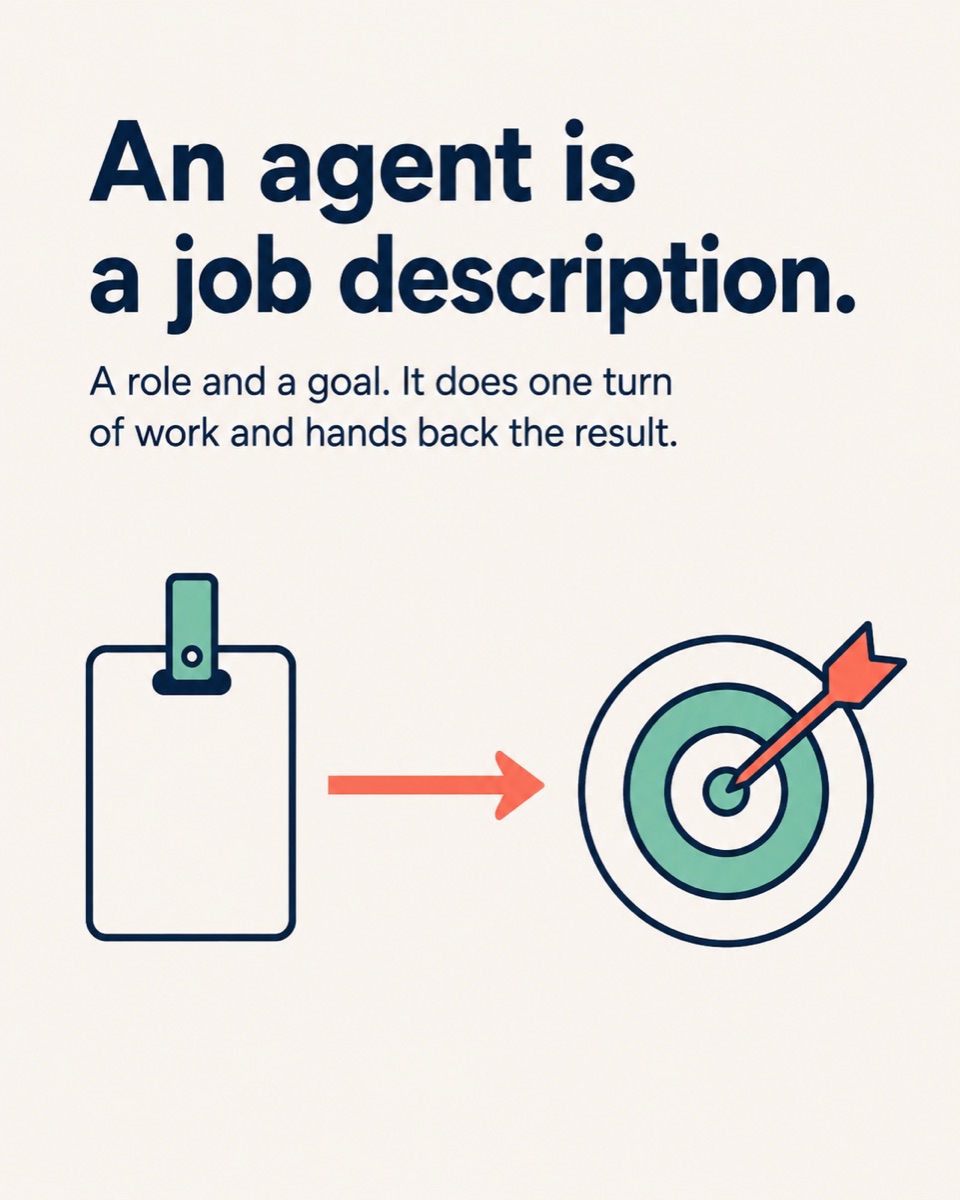
Layer three: an agent is a job description
A skill covers a task. An agent covers a role.
You write down who it is, what it’s responsible for, what a good outcome looks like, and what it must not do. Then it takes a turn: receives the brief, does the work, hands back a result.
That single-turn framing is worth holding onto, because it’s where most of the hype falls apart. An agent isn’t a colleague working away in the background having thoughts about your business. It’s a role description that gets executed on request and then stops. The value comes from how well the description is written — which is exactly the skill you already use when you delegate to people.
Layer four: tools stop you reinventing the wheel
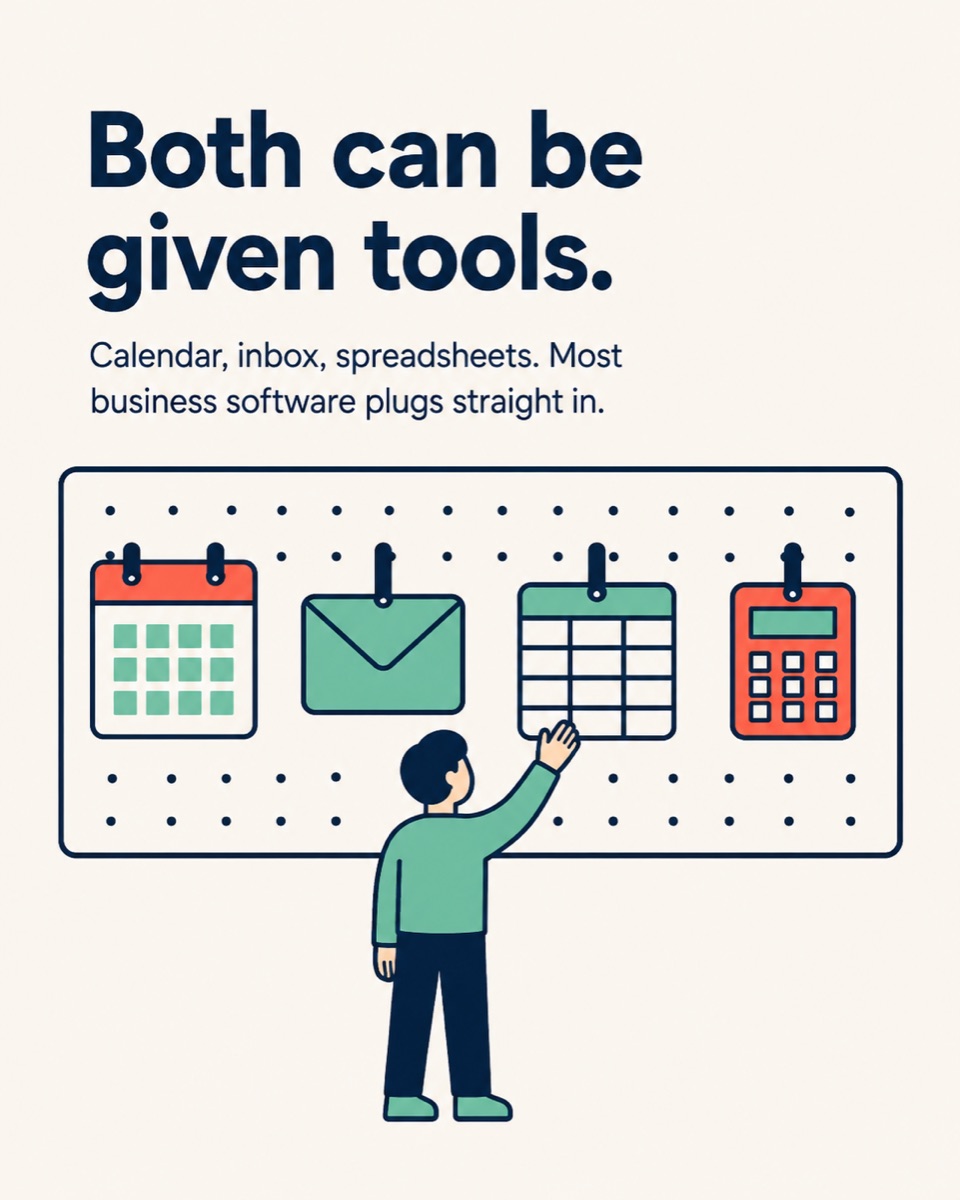
An agent that can only produce text is limited. Give it access to your calendar, inbox, spreadsheets, or CRM and it can act.
This is the part that sounds technical and mostly isn’t. Most business software now ships with the plumbing for this. You’re granting access, the same way you’d give a new hire a login — deliberately, scoped to what the role needs.
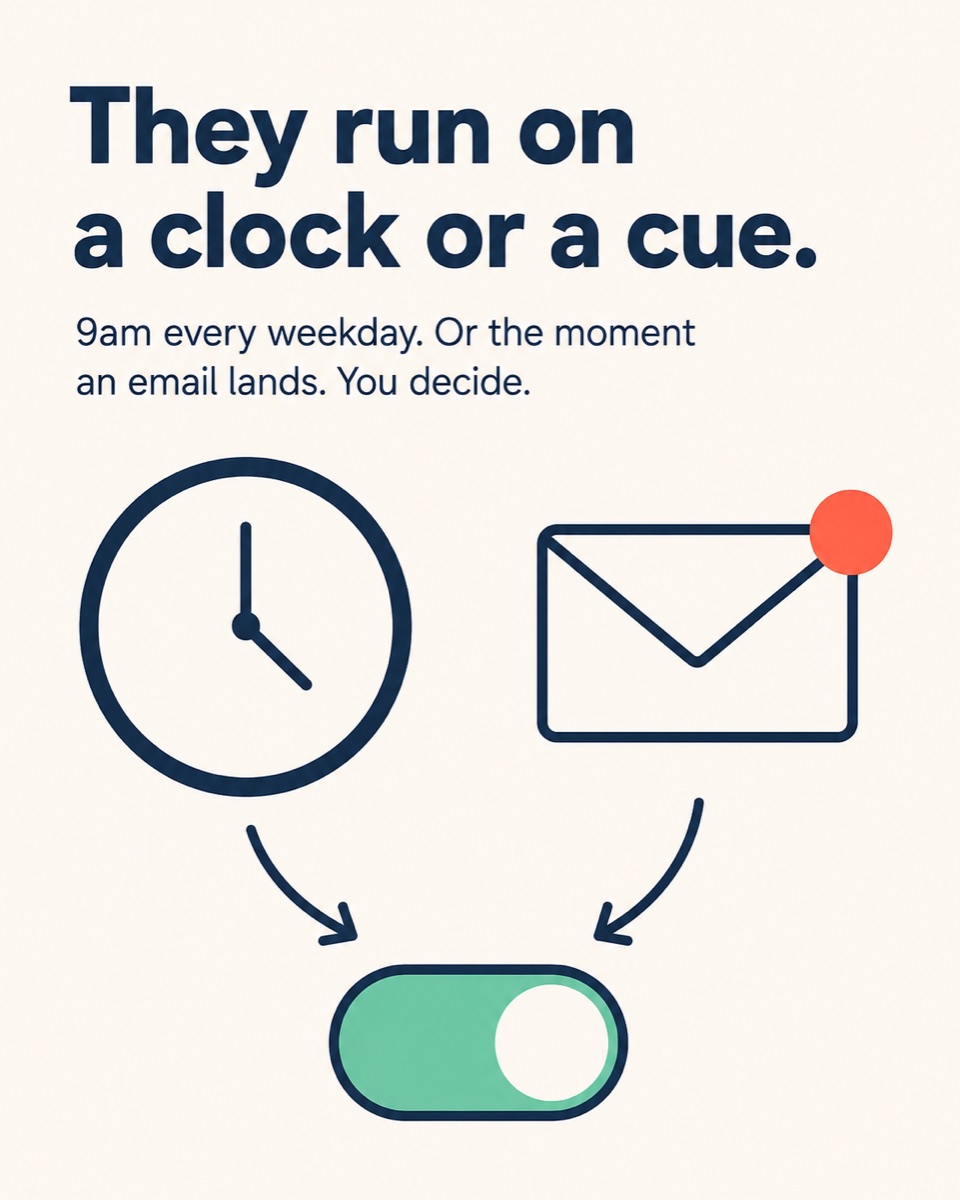
Layer five: work starts on a clock or a cue
Two triggers cover most real-world use.
Schedule. 9am every weekday. First of the month. Friday at close.
Event. An email lands. A form gets submitted. An invoice passes due.
You define the trigger once and stop thinking about it. This is the bit that converts a clever demo into something that actually removes work from your week.
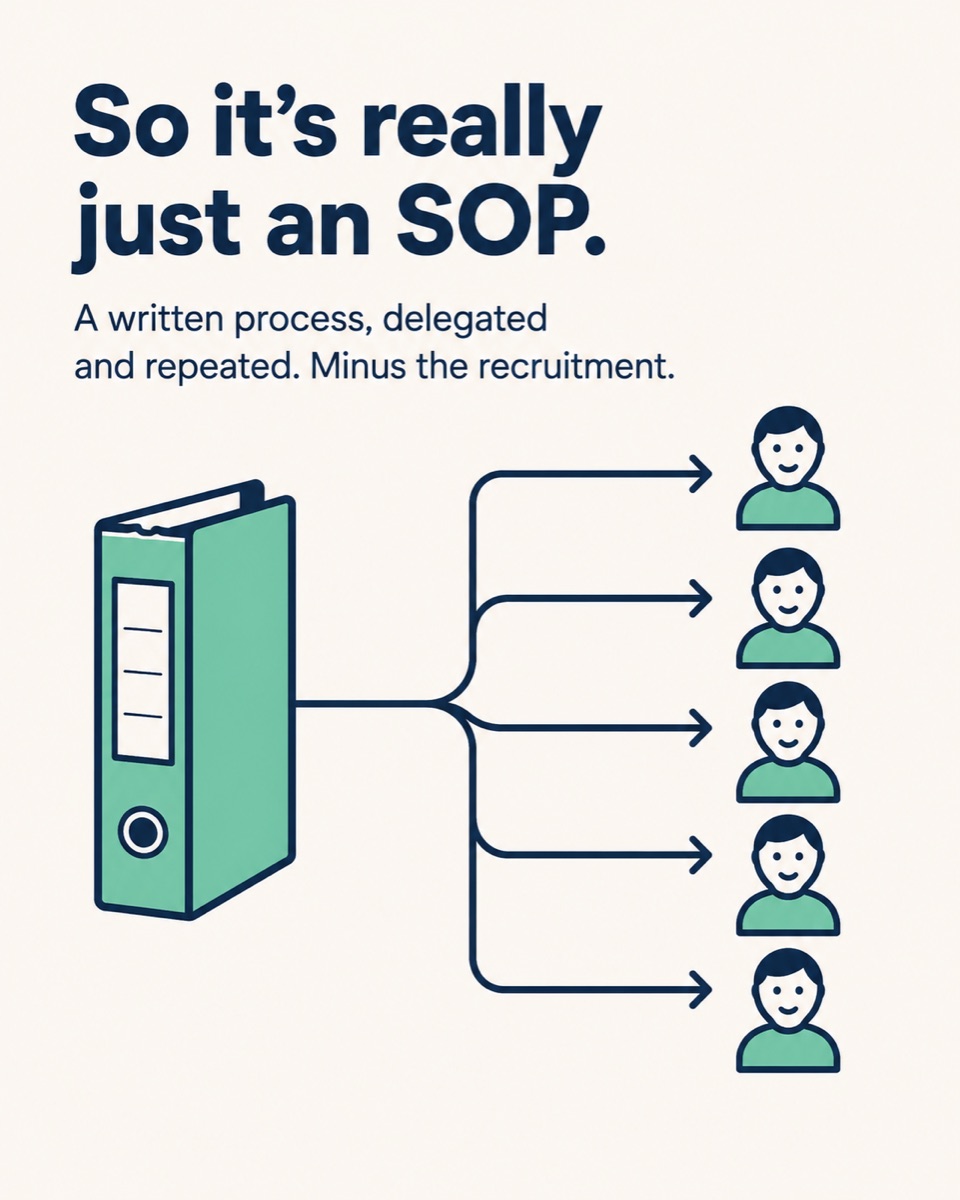
So what is this, really?
Written process. Delegated. Repeated.
That’s an SOP. You’ve built them before — for entry-level roles, for seasonal staff, for the parts of the business that needed to run without you standing over them. The discipline is identical: define the outcome, write the steps, specify the edge cases, check the output.
Which means the hard part isn’t technical. The hard part is the thing most businesses were already avoiding — writing down how the work actually gets done. Every organisation carries a quantity of undocumented process living in one or two people’s heads. Agents don’t fix that. They just make the cost of it visible sooner.
Where to start
Pick one task. Small, repetitive, low-stakes, done at least weekly. Write it down as if for a new starter — every step, every exception. Then hand that document to a model and see what comes back.
You’ll learn two things: how good the technology is, and how clearly you’d actually documented the task. The second is usually the more useful finding.
Working through this properly
If you’re weighing where this fits in your business — or you’ve tried and it didn’t stick — that’s usually a scoping problem rather than a technology one.
I help business owners identify which processes are worth automating, write them up properly, and build systems that run without constant supervision.